
Human vs AI Content: What Actually Converts in 2026?
Content marketing has entered a completely new phase. With the rapid rise of artificial intelligence, businesses are producing content faster than ever before. Blogs, ads, social media posts, emails—everything can now be generated in minutes using AI tools. But this has also created a big question for brands and marketers:
Does AI-generated content really convert, or does human content still perform better?
In 2026, this debate is more relevant than ever. Businesses are no longer asking “Can AI write content?”—they’re asking “What kind of content actually builds trust, ranks on Google, and converts users into customers?”
In this blog, we’ll explore Human vs AI Content, understand the strengths and limitations of AI content and AI generated content, and find out what truly works for conversions in 2026.
Understanding AI Content in Simple Terms
AI content refers to text, visuals, or media created using artificial intelligence tools. These tools analyze existing data, patterns, and language structures to generate content quickly and efficiently.
What AI Content Is Good At
-
Fast content creation
-
Cost efficiency
-
Generating large volumes of blogs or descriptions
-
Basic SEO structure and keyword placement
For many businesses, AI generated content has become a shortcut to scale content production. But speed alone doesn’t guarantee results.
What Is Human Content?
Human content is created by real people using experience, emotion, creativity, and strategic thinking. It reflects understanding—not just of keywords, but of audience psychology.
What Human Content Brings to the Table
-
Emotional connection
-
Real-life insights and examples
-
Storytelling and brand voice
-
Trust, credibility, and authenticity
When we talk about Human vs AI Content, the biggest difference is not speed—it’s depth and intent.
Why This Debate Matters More in 2026
In 2026, users are smarter. They can instantly recognize generic content. At the same time, Google’s algorithms are heavily focused on helpful, experience-based content.
This means:
-
Low-quality AI content is easier to spot
-
Generic blogs struggle to rank or convert
-
Trust has become the biggest conversion factor
So the real question isn’t AI vs Human, but what combination actually drives results.
Human vs AI Content: A Conversion-Focused Comparison
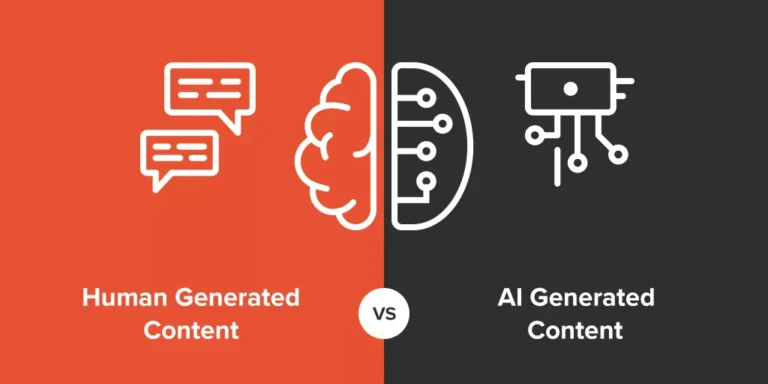
Let’s compare both from a conversion and business perspective.
1. Trust & Credibility
AI generated content often sounds correct, but it lacks lived experience. Human content, on the other hand, can share insights, opinions, and practical advice.
👉 Winner: Human Content
People buy from brands they trust—and trust is built through authenticity.
2. Emotional Connection
AI content is logical. Human content is emotional. It understands fear, excitement, confusion, and motivation.
In sales and marketing, emotions drive decisions more than facts.
👉 Winner: Human Content
3. SEO & Google Rankings
AI content can follow SEO rules, but Google increasingly prioritizes:
Experience
Original insights
Helpful answers
Pure AI generated content often lacks originality unless guided by human strategy.
👉 Winner: Human-guided AI Content
4. Speed & Scalability
There’s no doubt—AI content wins when it comes to speed and volume.
👉 Winner: AI Content
5. Conversion Rate
Content that converts usually:
Addresses real pain points
Speaks directly to the reader
Feels personal and trustworthy
Most high-converting content in 2026 still has a strong human layer, even if AI was used in the background.
👉 Winner: Human Content
The Real Problem With Overusing AI Generated Content
Many businesses make the same mistake:
They publish mass AI generated content without human editing or strategy.
This leads to:
-
Repetitive language
-
No clear brand voice
-
Low engagement
-
Poor conversion rates
In the Human vs AI Content debate, this is where AI fails—not because the technology is bad, but because it’s used without direction.
What Google Actually Thinks About AI Content
Google has made one thing clear:
It doesn’t hate AI content—it hates unhelpful content.
That means:
-
AI content is allowed
-
AI generated content can rank
-
But only if it adds real value
In 2026, Google evaluates:
-
Content usefulness
-
Depth of explanation
-
Originality
-
User engagement
AI alone can’t guarantee these factors. Human input is essential.
The Hybrid Approach: What Actually Works in 2026
The smartest brands are not choosing sides. They’re combining both.
Best Content Strategy for 2026:
AI content for research, structure, and speed
Human content for storytelling, insights, and conversion
This hybrid approach delivers:
Faster production
Better quality
Stronger SEO
Higher conversions
At TrendMatrixMedia, this balance is what drives consistent results for clients.
When Should You Use AI Content?
AI content works best for:
-
Initial drafts
-
Content ideas and outlines
-
Product descriptions (with editing)
-
Data-driven or repetitive content
Used correctly, AI generated content can save time and cost.
When Human Content Is Non-Negotiable
Human-written content is essential for:
-
Sales pages
-
Brand storytelling
-
High-competition blogs
-
Thought leadership articles
-
Content meant to build trust
In these cases, human insight is what makes the difference.
Human vs AI Content for Small Businesses
For small businesses, the goal is not volume—it’s impact.
Instead of publishing 50 AI blogs that no one reads, it’s better to publish:
-
Fewer blogs
-
High-quality, human-edited content
-
Conversion-focused messaging
This approach brings better ROI in the long run.
What Actually Converts in 2026?
After analyzing trends, user behavior, and performance data, the answer is clear:
👉 AI helps create content. Humans help convert users.
AI content supports efficiency.
Human content builds relationships.
And conversions happen where trust meets clarity
Final Verdict: Human vs AI Content
The debate isn’t about choosing one over the other.
The real winners in 2026 are brands that:
-
Use AI content smartly
-
Refine it with human strategy
-
Focus on value, not volume
AI generated content without human direction feels empty.
Human content supported by AI feels powerful.
How TrendMatrixMedia Approaches Content in 2026
At TrendMatrixMedia, we don’t blindly rely on AI or reject it completely.
We use AI for efficiency—but human creativity, experience, and strategy for conversions.
Our content approach focuses on:
SEO-safe AI content frameworks
Fully human-written and edited flow
Conversion-driven messaging
Long-term brand trust
Because in the end, content that feels human is what actually works.
Final Thoughts
In 2026, content is everywhere—but attention is limited.
Brands that win are those that stop chasing shortcuts and start focusing on real value.
The future of content marketing isn’t Human vs AI Content.
It’s Human + AI, done the right way.
If your goal is not just traffic, but real business growth, choosing the right content strategy has never been more important 🚀